Acrocyanosis, a functional peripheral artery disease, is a persistent, painless discoloration of both hands and, less commonly, of both feet, or sometimes the nose or ears, caused by spasm of the small blood vessels within the skin, usually made worse by cold or emotional stress.


Acrocyanosis usually occurs in women. The fingers and hands or toes and feet tend to feel cold and to be bluish (cyanosis). In people with dark skin, the skin may not appear blue, but a change in color is evident. Hands or feet sometimes sweat profusely and may swell. Emotional stress or exposure to cold usually intensifies the discoloration, and warming reduces it. The disorder is not painful and does not damage the skin.
Acrocyanosis is a normal condition in newborns and typically resolves within days to weeks, although it can persist through infancy.


This photo shows the contrast between the digital cyanosis in the hands of a person with acrocyanosis (center and right) and a normal hand (left).
ST BARTHOLOMEW HOSPITAL/SCIENCE PHOTO LIBRARY
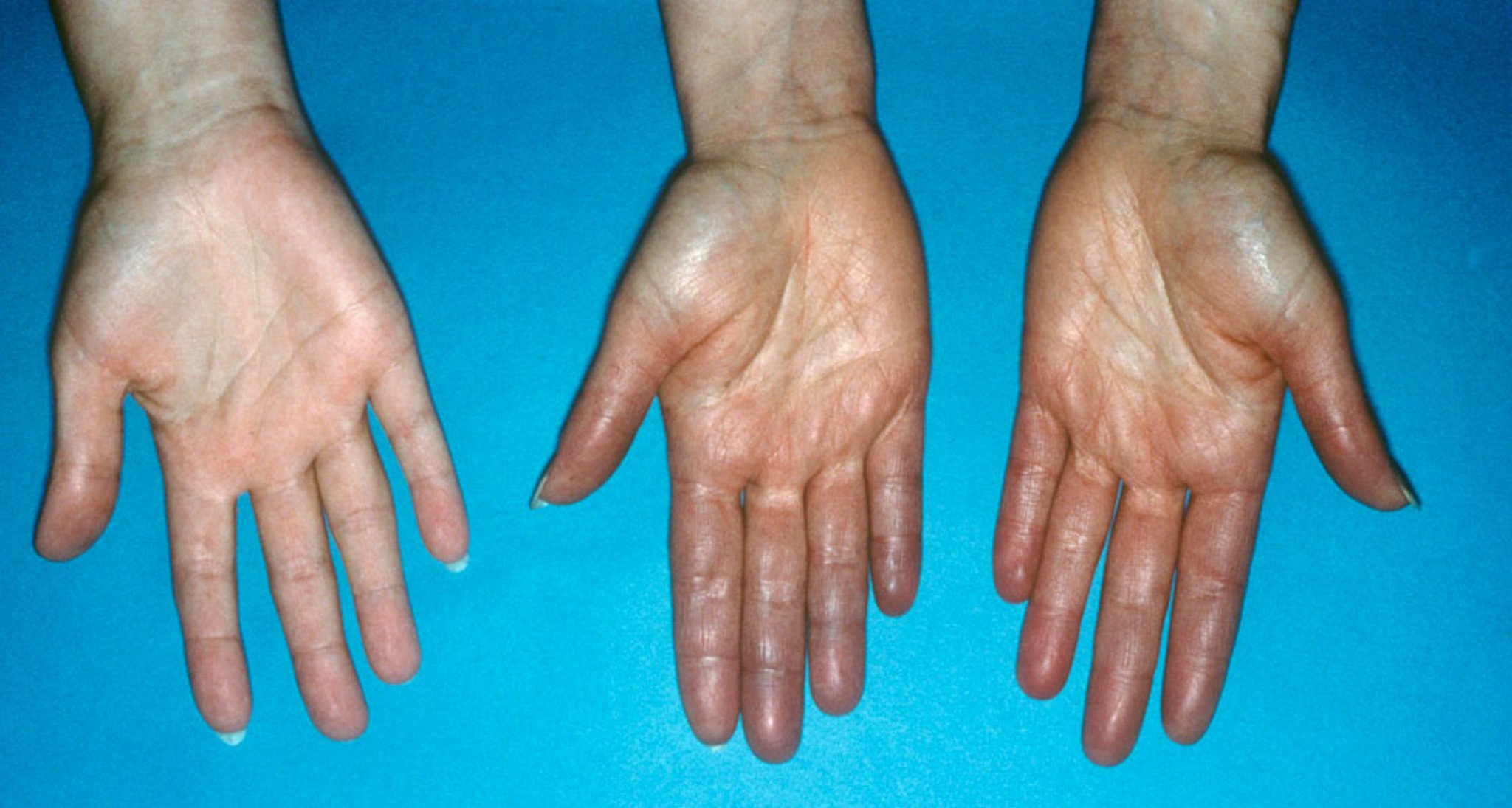
This photo shows the contrast between the digital cyanosis in the hands of a person with acrocyanosis (center and right) and a normal hand (left).
ST BARTHOLOMEW HOSPITAL/SCIENCE PHOTO LIBRARY
Doctors diagnose the disorder based on symptoms that are limited to the person’s hands or feet and that persist even though pulses in the larger arteries (such as in the wrist and ankle) are normal.
Treatment is usually unnecessary. However, doctors may recommend that the person try to avoid exposure to the cold. Doctors may prescribe medications that dilate the arteries (such as calcium channel blockers), but these medications usually do not help. Usually, reassurance that the skin discoloration does not indicate a serious disorder is all that is necessary.