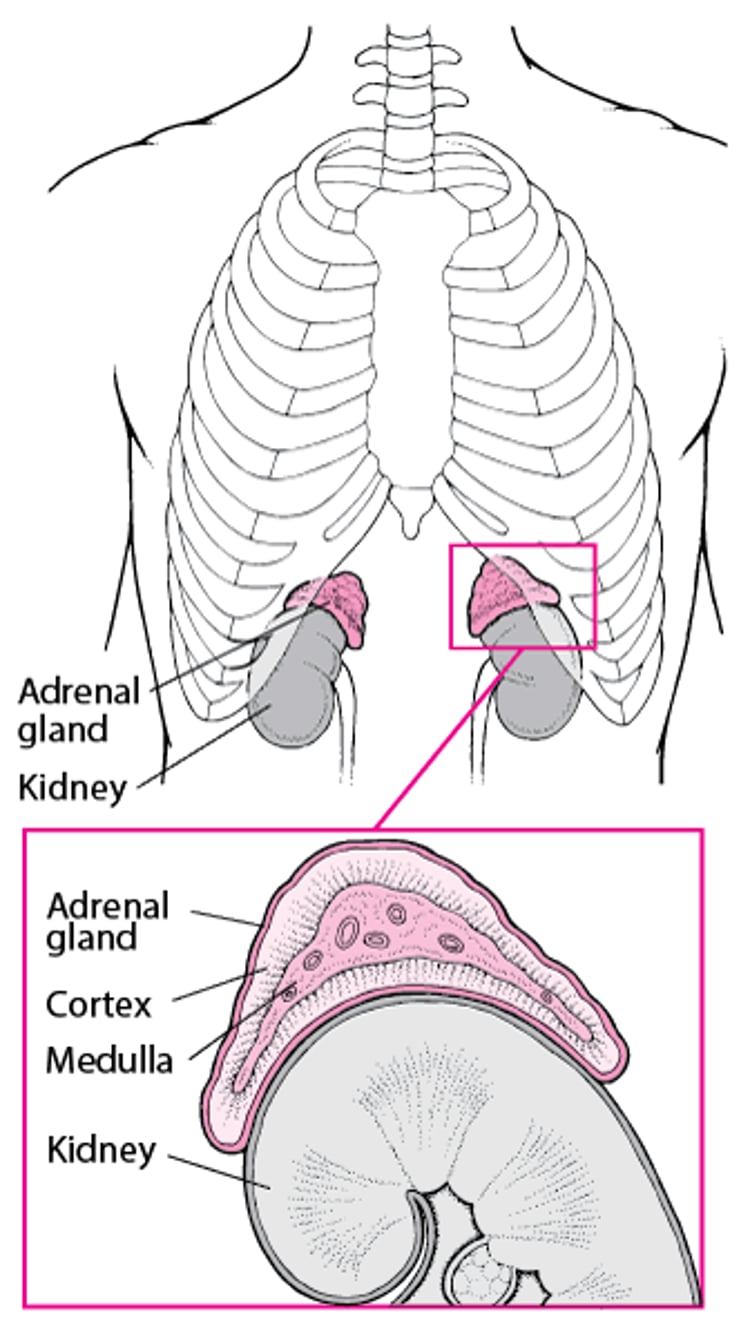
The body has 2 adrenal glands, one near the top of each kidney. They are endocrine glands, which secrete hormones into the bloodstream. Each adrenal gland has 2 parts.
Medulla: The inner part secretes hormones such as adrenaline (epinephrine) that help control blood pressure, heart rate, sweating, and other activities also regulated by the sympathetic nervous system.
Cortex: The outer part secretes different hormones, including glucocorticoids (cortisone-like hormones, such as cortisol) and mineralocorticoids (particularly aldosterone, which controls blood pressure and the levels of salt [sodium chloride] and potassium in the body). The adrenal cortex also produces small amounts of male sex steroid hormones (testosterone and similar hormones).
A Close Look at the Adrenal Glands

The adrenal glands are controlled in part by the brain. The hypothalamus, a small area of the brain involved in hormonal regulation, produces:
Corticotropin-releasing hormone (CRH)
Vasopressin (also known as antidiuretic hormone)
CRH and vasopressin trigger the pituitary gland to secrete corticotropin (also known as adrenocorticotropic hormone or ACTH). ACTH stimulates the adrenal cortex to secrete glucocorticoids (mainly cortisol) and adrenal androgens.
The body controls the levels of cortisolaccording to need. The levels tend to be much higher in the early morning than later in the day. When the body is stressed, for example due to illness, the levels of cortisol increase dramatically.
The renin-angiotensin-aldosterone system, regulated mostly by the kidneys, causes the adrenal glands to produce more or less aldosterone (see figure ).

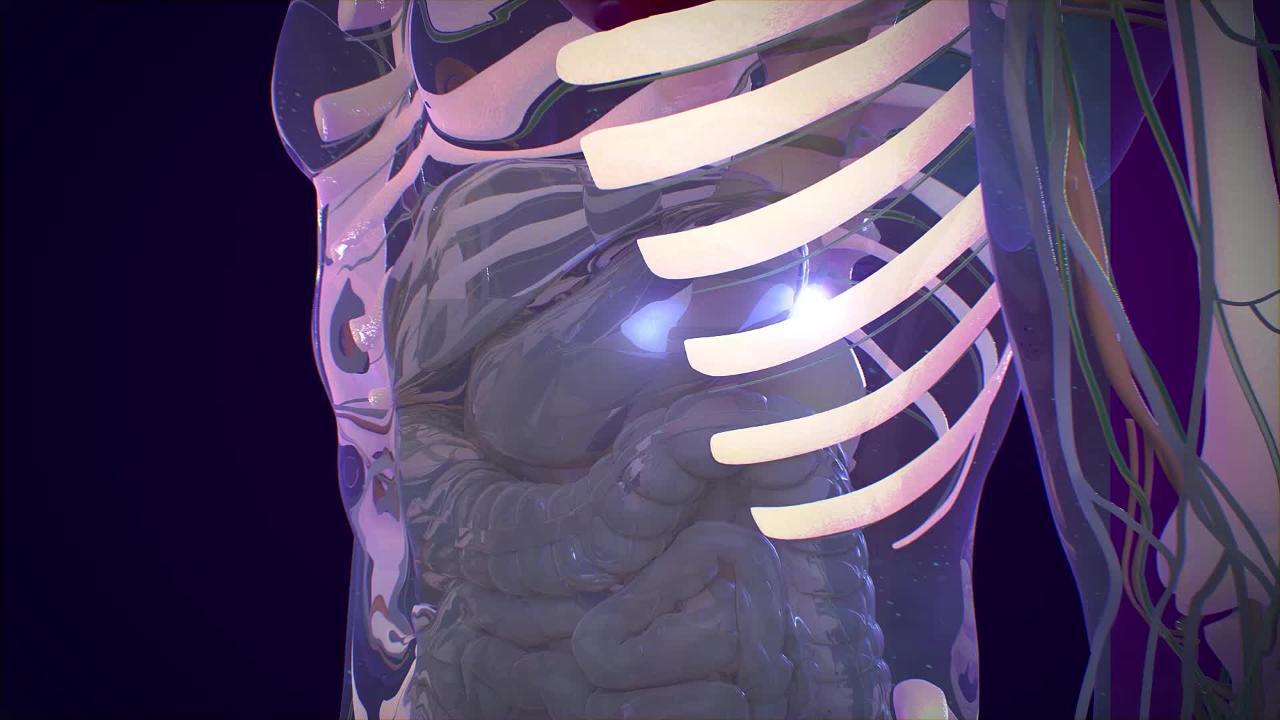
Adrenal disorders
Disorders of the adrenal glands can involve the secretion of too little or too much hormone.
When too little hormone is secreted (called adrenal insufficiency), it may be because of a problem with the adrenal glands themselves (called primary adrenal insufficiency, or Addison disease). Or it may be due to a problem elsewhere in the body, such as the pituitary gland or the hypothalamus. For example, a problem with the pituitary gland could mean that the adrenal glands are not being stimulated to secrete hormones. A problem with the hypothalamus could affect levels of pituitary hormones, which in turn would affect adrenal gland function.
When too much hormone is secreted by the adrenal glands (oversecretion, also called adrenal excess), the disorder that results depends on the hormone:
Oversecretion of glucocorticoids (such as cortisol): Cushing syndrome
Oversecretion of aldosterone: Hyperaldosteronism
Oversecretion of epinephrine and norepinephrine: Pheochromocytoma
Oversecretion of androgens (male sex hormones): Virilization